

In this Issue:
Costa Rica's Pacific jewel: Isla del Coco (Cocos Island)
At Isla del Coco, the real treasure is under the ocean
By Frank Stenstrom
Special to A.M. Costa Rica
A.M. Costa Rica photos/Frank
Stenstrom
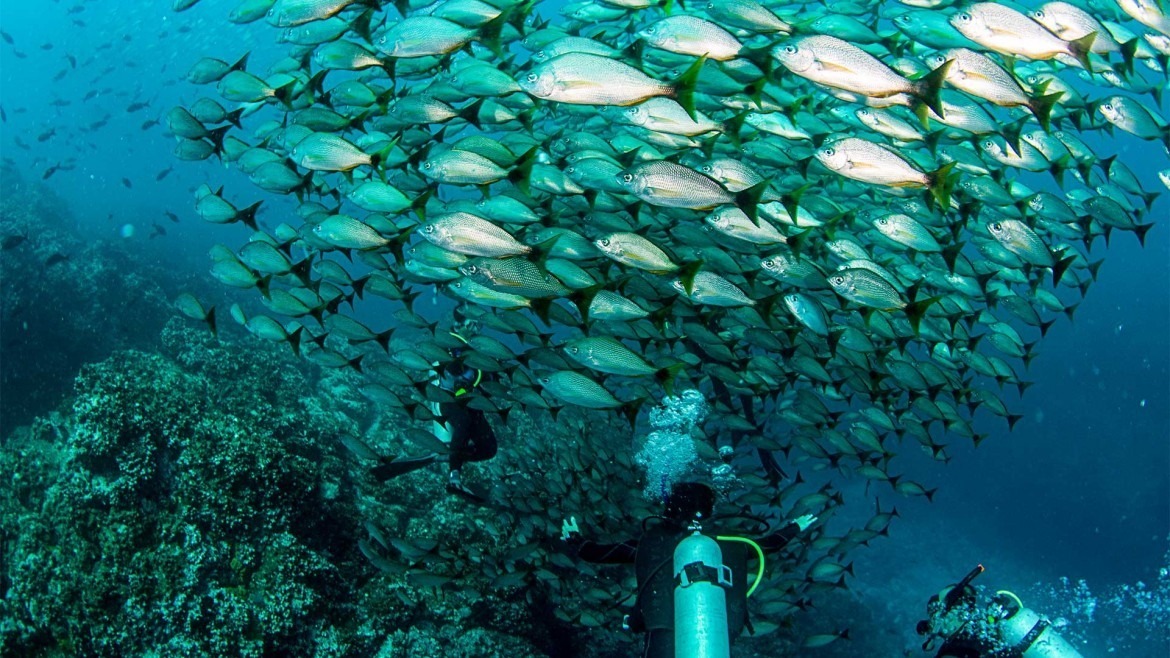
Hammerheads, by the hundreds or individually, are the
signature species at Isla del CocoThe first group of hammerhead sharks came straight toward us. They are three to four meters long, and their self-confident approach caused us to take cover behind some over-hanging rocks 25 meters below the surface. Soon thereafter a congregation of about 50 hammerhead sharks passed directly over us, no more than a few meters distance from us. We remained motionless and held our breathes.
In a few moments we were surrounded. It was a sight that commanded our respect. Their massive gray and white bodies moved gracefully while their black eyes scanned the deep blue depths of the ocean.
When we were sure they had gone, we left our hiding-place and swam toward a rock shelf where roughly ten reef sharks lay en masse. The reef sharks regarded us sluggishly and seemed not to bother about us.
During the first dives I felt apprehensive already at some distance from them while making my approach. But now after a number of days in their environment and after seeing hundreds of reef sharks, it is a first when I almost rub up against their meter-long bodies that my uneasiness reawakened within me.
Abruptly, about 20-30 centimeters distance from them, the sharks come alive and their bodies become rigid and filled with apparent force. Their yellowish green eyes look threatening, and I back carefully away fearful of an attack. The reef sharks quickly leave their rock shelf.
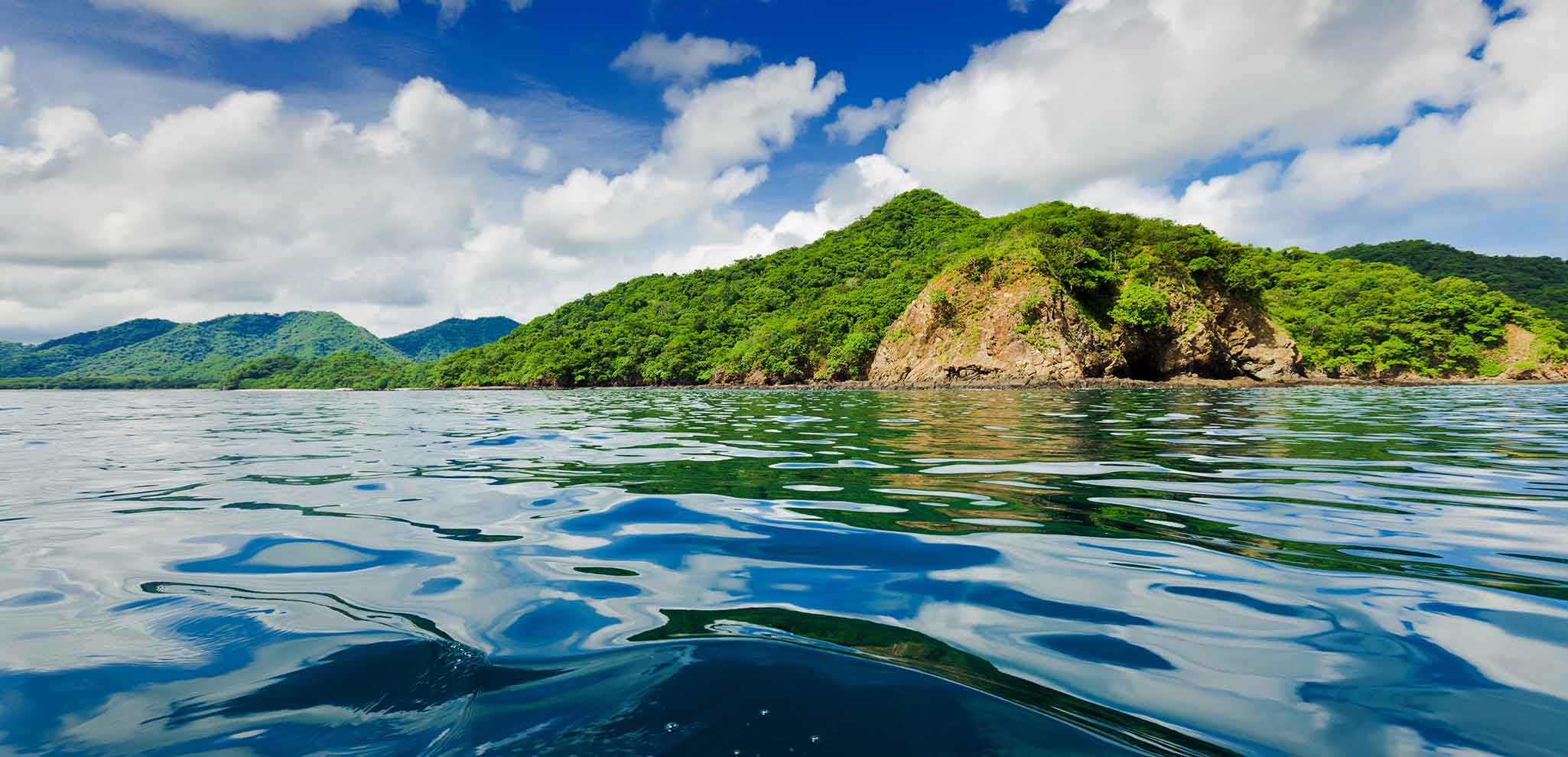
Few places on this earth have such an enormously rich marine life as does Isla del Coco, the tropical island 500 kilometers southwest of Costa Rica's mainland. It is also known as Treasure Cove Island. The first pirates came here during the 17th century to rejuvenate themselves and gather supplies in preparation for their next raid along the American coast.
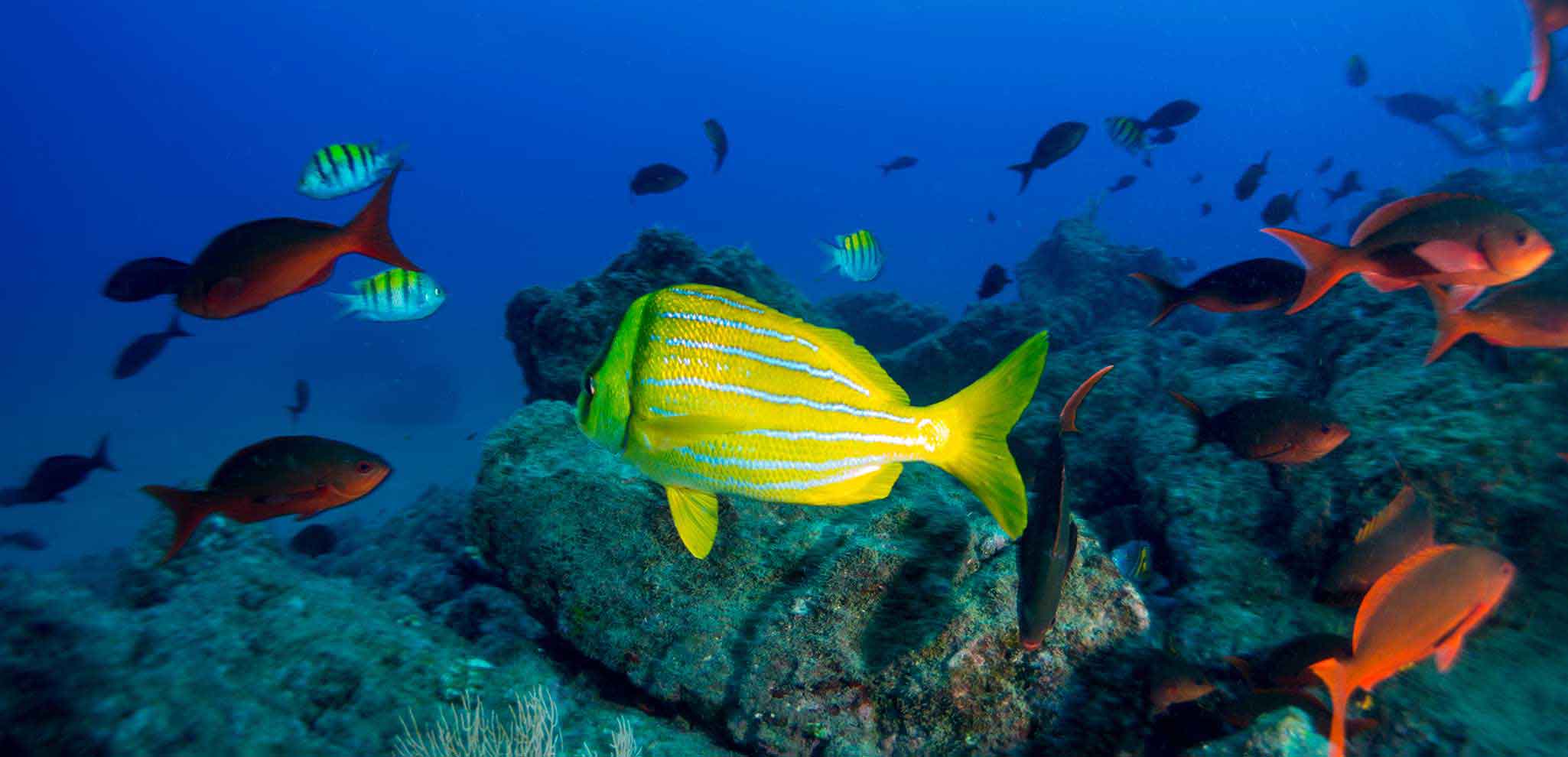
According to an enduring legend, the pirates also hid gold and precious stones worth hundreds of millions of dollars on this very island. However, none of the 500 known treasure expeditions found so much as one gold doubloon. The real treasure now is the ocean around the island. In the warm, shimmering turquoise aquatic sanctuary live animals and plants which in many cases are found only around Isla del Coco.
There is nothing to compare to this, said underwater photographer Jay Ireland, who for 30 years has dived in places all over the world.
"Coco is for me No. 1." he said. "There is nowhere else I have swum around with hundreds of hammerhead sharks around me then following that, met whale sharks, giant manta rays, sea turtles and dolphins. During just one dive! There are unprecedented numbers of species here, and the most surprising is the enormous numbers in which they exist."
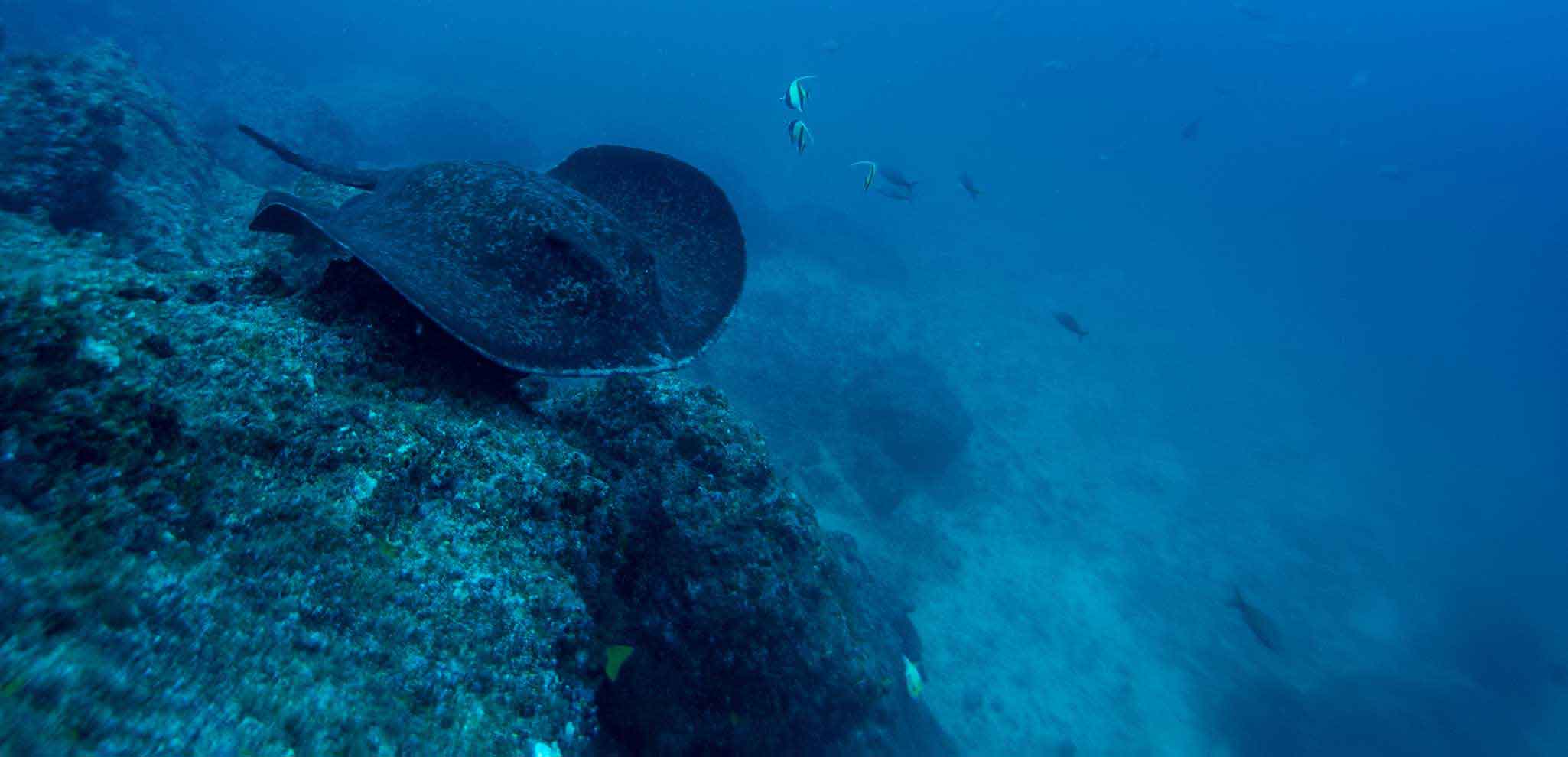
Isla del Coco is one of the few places in the world where hammerhead sharks assemble in the thousands. They come here along with other large ocean dwellers like whale sharks and giant manta rays to let themselves be cleansed of reef fish. Most dives are also done near these cleaning stations which often lie 30 to 40 meters below the surface. It is here hammerhead sharks stop to let small fish clean away parasites and dead tissue. Scientists also believe hammerhead sharks are drawn to the island to breed, and that can be why they gather in such large flocks. Another theory is that Isla del Coco is a half-way point during their wandering in the Pacific Ocean.
Because the island is a national park certain divers live on board our boat during the 10-day trip. The actual diving takes place from Zodiacs or small aluminum boats. The number of divers on every boat is usually 20, and
normally there are three dives a day. Those who are not worn out after three dives are even offered a night dive.
The diver who wishes to go on a treasure hunt or bathe under one of the over 200 waterfalls on the island has an unforgettable experience. Early one morning, just for that reason, we came ashore with the Zodiacs. The high waves made it necessary to swim the last bit to then be suddenly cast up on shore by the waves.
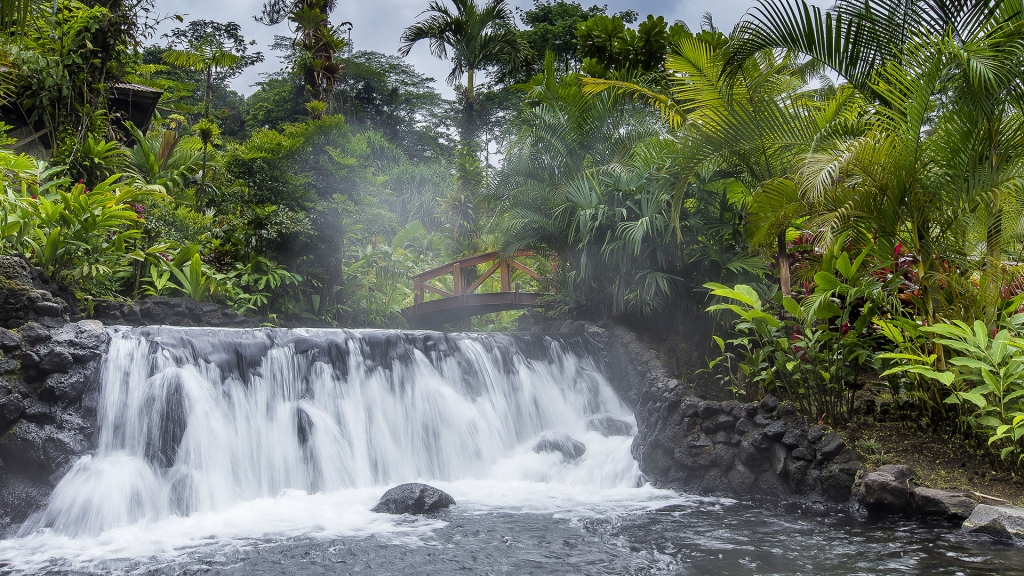
When all had gathered, we started into the jungle and began our hike toward one of the waterfalls. It is hidden by the dark green tropical foliage, and it is easy to let your fantasy take over. Every cave one sees seems to be the ideal hiding place for a treasure of gold and precious jewels.
On the larger rocks seafarers have carved in the names of ships and short messages. " Cousteau" is one we found. Arrows and mysterious symbols were carved into yet another of these large rocks.
After half an hour of hiking along a jungle brook we arrived in front of a cliff wall where a waterfall was cascading down 60 meters. The water was wonderfully cool and refreshing. While we rested under the falls the guide began telling us of how gold fever can change people. It was mainly concerning a man by the name of Gissler, a German who in the early 1900s lived on Isla del Coco with his American wife. For 20 years they searched for hidden treasure before giving up and returning to the mainland. Gissler later died penniless in New York City, never having succeeded in discovering so much as one gold coin, said the guide.
Of course it is exciting to experience Isla del Coco as an old pirates' island. All that fades away, however, the minute a diver enters the water. During one of my dives with my diving partner, Randy Johnson from Alaska, we were approached by 12 large mantas right near the surface.
We adapted our weights and hung motionless just under the surface while they calmly swam under, over and between us within just a few inches. We could clearly see traces of parasites on their bodies, small sores and even, swimming around them, the reef fish who helped to heal the mantas sores. That dive was worth more than any treasure of gold. When we later came up to the surface, we were told by the driver of our Zodiac that mantas often follow the rubber boats and that they like to hold themselves close to them.
To live aboard a boat in the middle of the Pacific Ocean with 15 to 20 other divers for 10 days is an intense experience. Everyone has something wonderful and fantastic to tell about their dive. Free time is spent exclusively preparing for the next dive; cameras are cleaned, batteries charged, and film is developed.
Even though every dive involves contact with sharks in the hundreds, attacks are rare. This is due in part to the crew on board who thoroughly instruct divers not to touch the sharks.
"I have witnessed one or two accidents where a diver was attacked by reef sharks, but it has always been the diver's fault, said dive master Mario Vargas, who has been diving around Isla del Coco for almost 20 years. He explained that it is of course inviting to touch the sharks when they come so close.
"Reef sharks, especially, which can measure up to three meters long, usually ignore divers but if someone touches them, they will be bitten immediately and it hurts," said Vargas. "Most often it is a bite on the hand and the attack is over." He said he never witnessed a hammerhead shark attack. Divers are certainly more respectful of them.
Undercurrents around Isla del Coco can betray a diver. To try and swim against them is useless, and a diver has to hold himself near the coastline during every dive. If a diver loses sight of the coastline, the under current drags him right out into the open Ocean. The crew, however, is experienced and knows where to look if a diver does not come up at the agreed upon meeting place.
Powerful up or down streams are also common. They are caused by deep ocean streams that collide with the coast, and they can, in no time at all, drag a diver with them. In such an instance all that counts is reacting quickly and adjusting weights.
If a diver does not, things can end badly. During one dive I was sucked into a climbing stream. Before I managed to react, it had carried me into a cliff wall where 20 or 30 needle sharp sea urchins waited. Without seeing them, I put my left hand right on their spikes — and screamed. I was only really worried when I saw blood seeping out of my glove because I thought the reef sharks near me would react to the smell of blood. But they could not have cared less.
Isla del Coco is full of cliffs, and all the dives are done along the coastline or out to sea some hundred meters from the edge of the beach. The bottom is made up of fine sand and sharp cliffs of volcanic origin. Disability varied between 25 to 50 meters.
The island lies five degrees north of the equator. Divers who expect warm tropical diving with corals will be disappointed. Most of the coral was carried away in 1982 and 1983 by a product of El Niño, a warm ocean current which periodically pulls in toward the American coastline. For visitors, Isla del Coco is an oasis both under the surface and on land. The pirates have of course left the island but the priceless wealth of flora and fauna still remain — and possibly a few gold doubloons.
EDITOR'S NOTE: Mr. Stenstrom is a Swedish journalist.
A.M. Costa Rica
photo/Frank Stenstrom
Divers are warned that they should resist
temptation to touch the sharks.
To see more about Cocos Islanda:
GO HERETo see more about scuba diving tours in Costa Rica:
GO HEREWe are always at your service for any questions that you may have: CALL 877 853-0538 Or E Mail:
costarica@diveres.com
For information about Costa Rica scuba diving, soft adventure, extreme
adventure, accommodations and travel throughout the country contact our
U.S. Office 877 853-0538 M - F, 9 - 5 ET Or EMail Anytime.
Planning a trip? Subscribe to our FREE, informative newsletter, know before you go. CLICK HERE
www.BillBeardCostaRica.com